Where rock wool is considered
Rock wool is presented on the company homepage for building assemblies, industrial assemblies, fire-protection assemblies and acoustic assemblies. Those four application lines describe the settings in which rock wool questions most often arise: walls, roofs and partitions inside buildings; plant and equipment surroundings in industrial settings; assemblies where fire behaviour is part of the brief; and rooms and partitions where sound behaviour matters. A rock wool enquiry should therefore start by naming the assembly, since the assembly decides which form is relevant and which questions follow.
An assembly-first enquiry also keeps the discussion concrete. A wall assembly question leads to boards and blankets, a pipe question leads to pipe sections, and a partition question leads to batts and blankets. Each of those paths has its own handling and fixing considerations, and each is better discussed once the assembly is known. The form page for rock wool boards and blankets, and the guides on fire protection and acoustics, carry those discussions further for buyers who want to test a choice before enquiring.
Rock wool forms in this route
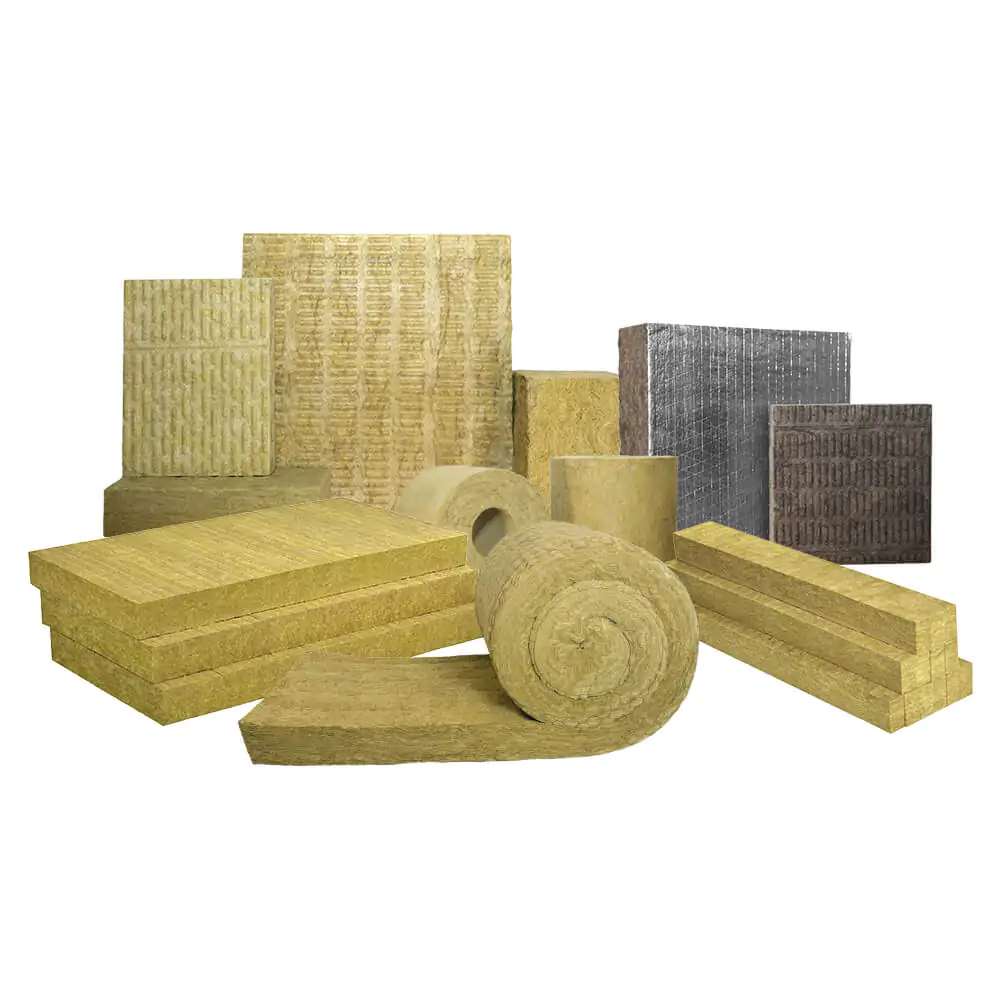
The forms listed for rock wool are boards, blankets, pipe sections and batts. Boards suit flat surfaces and assemblies where a rigid layer is laid against a wall, roof or partition. Blankets suit surfaces that need a flexible layer, including curved or uneven areas where a board would not sit well. Pipe sections suit pipework, where insulation must follow the pipe shape and close around it. Batts suit cavities and framed assemblies, where pieces are fitted between members. The form page describes boards and blankets together, and the pipe guide covers pipe sections across routes.
Form choice interacts with fixing and finishing. A board enquiry should state the surface it will sit against and how it will be held in place. A blanket enquiry should state the area and the shape it must follow. A pipe section enquiry should state the pipe sizes and the system the pipes belong to. A batt enquiry should state the cavity or frame it must fit. Those details are not catalogue facts; they are enquiry facts, and the checklist pages collect them in order.
Rock wool beside the other routes
Beside glass wool, rock wool shares the building and acoustic application lines, and the choice between them often turns on the assembly and the form rather than on the route name alone. Beside cellular glass, rock wool differs in the systems it is presented for: rock wool for building and industrial assemblies in general, cellular glass for industrial and cold-service systems where moisture resistance is critical. Beside rubber foam, rock wool differs in flexibility and system: rubber foam is presented for heating and cooling and chilled-water systems where flexible condensation control is required.
The comparison guide sets cellular glass against mineral wool, and the selection guide works through route choice by application and form. A buyer choosing between rock wool and another route should use those guides before the enquiry, because they show which questions change the answer. A choice made on route name alone, without an assembly and a form, is a choice that the enquiry will have to reopen.
Rock wool questions to carry into the enquiry
A rock wool enquiry should name the assembly, the form and the quantities, and should describe the surfaces and conditions the insulation must suit. It should also ask about quantity terms, timing, trade terms, payment method and documents for the items named, since none of those points is stated as a catalogue fact. If fire behaviour or acoustic behaviour is part of the brief, the enquiry should state what behaviour is required and in what setting, so that the answer can address that setting rather than offering a general statement.
Where a document is needed, the enquiry should name the item and the requirement together. Certificates are available upon request. That order, items first and documents second, keeps the reply checkable against the order, which is the only form in which a document answer is useful to a buyer.
Certificates available upon request. Please confirm the minimum order quantity in your inquiry before placing an order. Please confirm the lead time with the supplier before placing an order. Please confirm the trade terms and payment method before confirming an order.