What this page quotes, and from where
Every model name and specification value on this page is quoted with attribution to the company product page for the BoroCell cellular glass board line. The product page records the line as HUAYUE BoroCell cellular glass board, and records eight model names: CGN160, HY500, HY800, HY1000, HY1200, HY1400, HY1600 and HY2400. The base values recorded on that product page are a density of 160 kg/m³, a thermal conductivity of 0.056 W/(m·K), a service temperature range of -268 to +480 degrees Celsius, a combustibility class of A, a flexural strength of 0.5 MPa, a water vapour permeability of 0.05 ng/(Pa·m·s) and a water absorption by volume of 0.5 vol%. Those values are product page records for the line, and they are presented here as such.
The specification table below repeats the product page table for the eight models, with the same attribution. Density, thickness, width, length, pieces per pack and testing method are given model by model, as recorded on that product page. Nothing in the table is extended beyond the product page wording: no additional model, no additional value and no additional application has been added. A buyer who wants to discuss a value in the table should name the model and the value together in the enquiry, so that the discussion can stay on that model.
Reading the model table
The table shows a clear pattern across the series: the CGN160 model carries a 500 mm width and a 620 mm length, while the seven HY models carry a 450 width and a 600 length, with thickness of 20-180 and pieces per pack of 3-15 across all eight models. Density rises across the HY models from 115±10% for HY500 to 200±10% for HY2400, with CGN160 at 160±10%. Testing method is recorded as GB for CGN160 and as ASTM for the seven HY models. Those are the table facts as recorded, and a buyer comparing models should compare them on those recorded columns, not on any column the table does not contain.
Two cautions apply to reading the table. First, the table is a single product page record: it describes the eight models named, and it does not describe the whole cellular glass route, let alone the whole catalogue. Second, the applications recorded for the line on the product page, including tanks and tank bases, pipelines, vessels, equipment, cryogenic ships and circulation and dual temperature systems, are product page application wording, and this site presents them as such. A buyer with a particular system should describe that system in the enquiry and ask how it relates to the model under discussion.
Forms and applications for the series
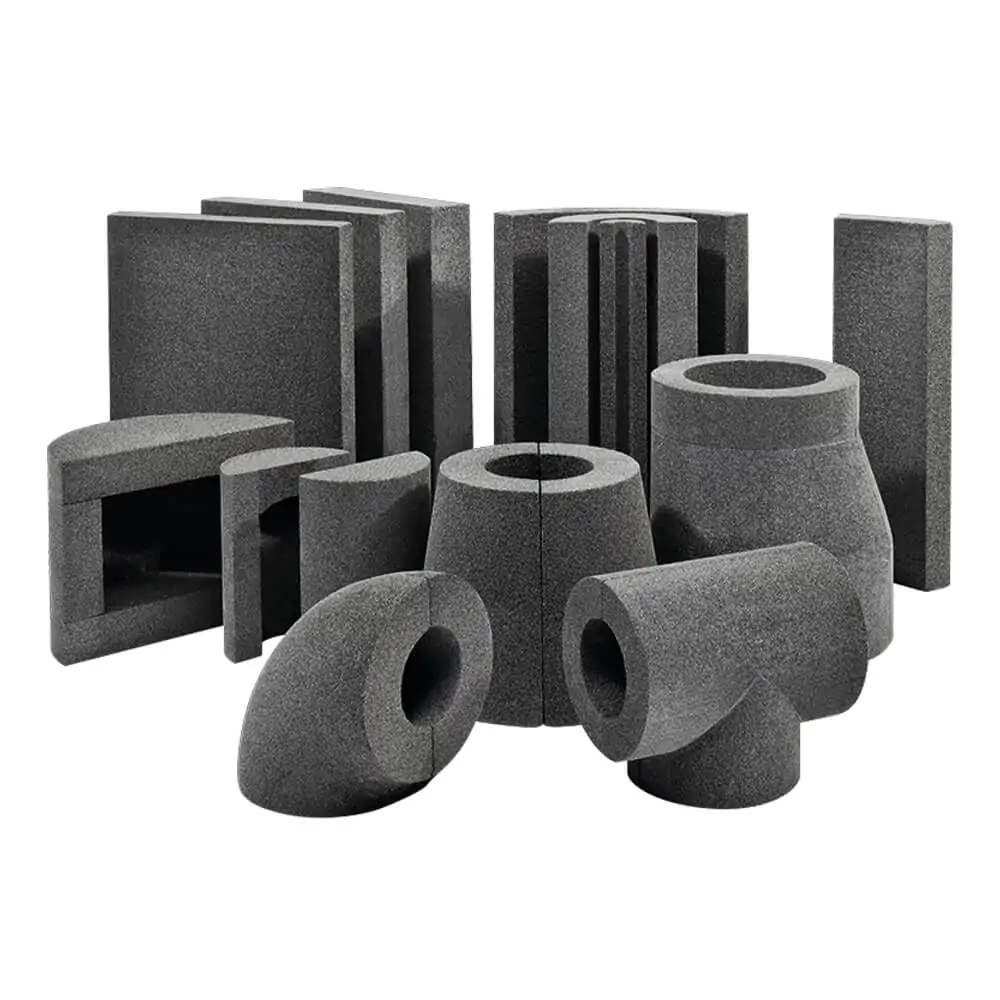
The cellular glass route forms that relate to this series are boards, pipe sections, gravel and custom shapes, as listed on the company homepage for the route. Boards suit flat surfaces and assemblies, pipe sections suit pipework, gravel suits fill work, and custom shapes suit fittings and junctions. A series enquiry should therefore name the model, the form and the application together, since a model name alone does not settle the form, and a form alone does not settle the model.
Applications recorded for the line include industrial and cold-service settings, and the guides on cold service, cryogenic service and tanks discuss those settings at route level. A buyer with a cold-service or tank application should read the matching guide before the enquiry, then name the model, the form and the system together in the enquiry. That order, guide first and enquiry second, produces a more direct answer than an enquiry that names a model without a system.
BoroCell questions to carry into the enquiry
A BoroCell enquiry should name the model, the form, the application and the quantities, and should quote any specification value under discussion by model and column, so that the discussion can stay on that value. It should ask about quantity terms, timing, trade terms, payment method and documents for the items named. If packaging or labelling matters for the order, the enquiry should state what is needed, since packaging and labelling are order matters rather than catalogue facts.
Documents follow the same order: items first, documents second. The general wording is that certificates are available upon request, and any document question is answered for named items in the enquiry. An enquiry that follows that order will produce answers that can be checked against the order.
| Model (MIC product page) | Density | Thickness | Width | Length | Pieces per pack | Testing method |
|---|---|---|---|---|---|---|
| CGN160 | 160±10% kg/m³ | 20-180 mm | 500 mm | 620 mm | 3-15 | GB |
| HY500 | 115±10% | 20-180 | 450 | 600 | 3-15 | ASTM |
| HY800 | 120±10% | 20-180 | 450 | 600 | 3-15 | ASTM |
| HY1000 | 130±10% | 20-180 | 450 | 600 | 3-15 | ASTM |
| HY1200 | 140±10% | 20-180 | 450 | 600 | 3-15 | ASTM |
| HY1400 | 150±10% | 20-180 | 450 | 600 | 3-15 | ASTM |
| HY1600 | 160±10% | 20-180 | 450 | 600 | 3-15 | ASTM |
| HY2400 | 200±10% | 20-180 | 450 | 600 | 3-15 | ASTM |
Certificates available upon request. Please confirm the minimum order quantity in your inquiry before placing an order. Please confirm the lead time with the supplier before placing an order. Please confirm the trade terms and payment method before confirming an order.